


By Siraya Pai
“The usual procedure for a country to join OISTAT is through an existing domestic organization in theatre technology or related fields. Taiwan was the complete reverse – we secured membership first, and only then felt the sudden urgency to establish an organization serving as the OISTAT Centre!” As Duncan Ei-Eu Chang, founding president of Taiwan Association of Theatre Technology (TATT), recalled, Taiwanese theatre technicians and designers’ early encounters with the international theatre scenes in the 1990s was chaotic, confusing, and information-lagged, yet driven by reckless, unstoppable momentum.
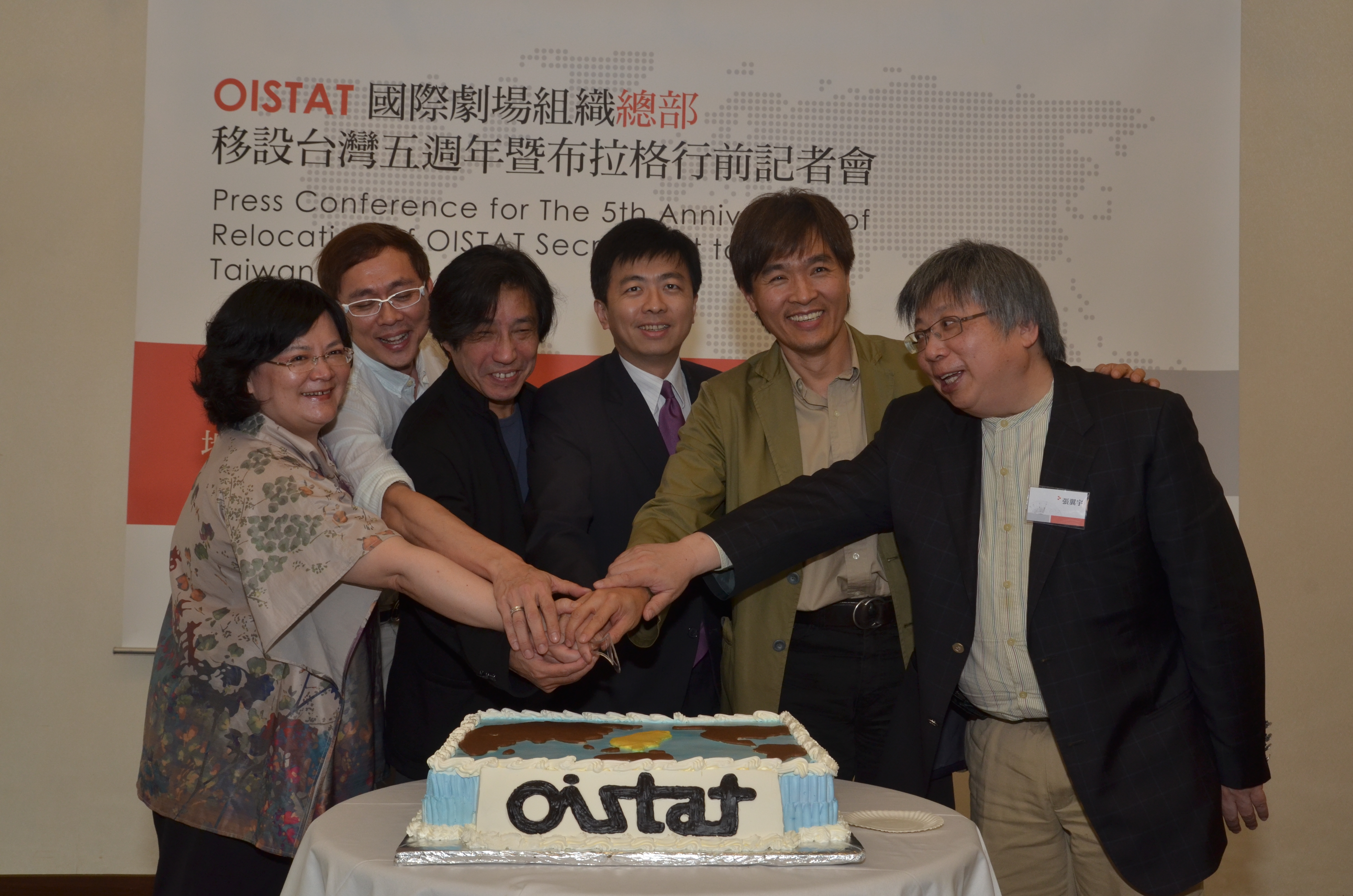
2011 5th Anniversary of OISTAT Headquarters in Taiwan
Clueless, yet Fully Charged
Back then, Taiwan’s international theatre exchanges relied almost entirely on individual participation. In 1995, set designer Austin Wang toured Europe with Cloud Gate Dance Theatre during the same time when the Prague Quadrennial (PQ) was taking place1. By attending international events like this, Taiwanese theatre practitioners first heard about OISTAT. Despite knowing very little about the organization, they made initial contact and successfully registered Taiwan as an observer member under the Chou Kai Theatre Foundation, chaired by stage manager Hui-Teng Chan. “We didn’t even know what OISTAT actually did, and they knew nothing about us either,” Chang laughed.
Founded in 1988 in memory of lighting designer Chou Kai – who tragically died in a high-scaffold fall while hanging lights – Chou Kai Theatre Foundation was dedicated to theatre safety and standardized production management as Taiwan’s sole technical theatre organization at the time. Once Taiwan upgraded its status in OISTAT from observer to official OISTAT Centre, the core organizers realized that a private memorial foundation was not appropriate to represent Taiwan internationally. Consequently, the foundation's then-chair Hui-Teng Chan rallied leading theatre technicians and designers, including lighting designer Keh-hua Lin and technical director Pao-Shan Chung, and recruited over 300 theatre practitioners across Taiwan to found TATT, with Duncan Chang severing as its first president.
Championed by then-executive board member Pin-Pin Chin and secretary-general Yi-Ming Chiu, TATT ambitiously targeted the upcoming PQ in the following year to mark its presence on the international stage. After managing to make contact through emails and long-distance phone calls, they disappointedly realized that “the application deadline had passed two years ago!” Yet information gaps and setbacks like this never discouraged these fully charged designers and technicians, who poured their collective effort into advancing Taiwan's international theatre exchanges. In 1999, Chin and Chan flew to Prague anyway for the PQ, where they also attended the OISTAT World Congress held during the festival.
Making Friends to Survive Quiet Political Battles
Frustrating diplomatic experiences have taught every Taiwanese to arm themselves with acute geopolitical sensitivity whenever attending international events, even preparing several scripts in advance to counter attempts to erase or downplay Taiwan’s presence. However, back in the 1990s, the pressure from China was not as suffocating as it is today, while genuine, non-governmental cross-strait connections and cultural exchanges still widely existed. Through these personal networks, Duncan Chang was able to feel out the situations, assess Taiwan’s advantage, and strategize accordingly; yet he noted that theatre practitioners from Mainland China were also caught in a dilemma between personal relationships and political directives.”
Although Taiwan joined OISTAT under the name “Taiwan,” subtle political maneuvering persisted. As Chang recalled, “there was one meeting where no Chinese representative attended, but we found out that the official program had changed our name to ‘Taiwan, China.’” When he severely protested to the administrative team, “their attitude was evasive, telling us to keep politics out of a professional organization, but didn’t they change our name for a political purpose?”
This incident made Chang realize that “fighting alone was never going to work; we had to get involved and make friends.” Convinced by this belief, Chang and his fellow theatre practitioners decided to show up and make themselves visible wherever OISTAT had a meeting or gathering – even though they were still figuring out “what OISTAT actually did.” OISTAT’s organizational structure includes six commissions – Architecture, Performance Design, Technology, Education, Research, and Publication and Communication – with each commission convening annually. In 2001, Wei-Wen Chang attended Small Congress taking place in Berlin and was elected to the executive committee. Later that year, Tien-Tsung Ma and Pao-Shan Chung attended the commission meeting in Long Beach, California. There, they eagerly persuaded the administrative team to bring the upcoming Executive Committee, Education Commission, and ultimately the Governing Board meetings to Taipei. Chang’s strategy was simple and direct: “since cross-strait pollical struggles were unavoidable, we needed to build solid relationships and stand firm.”
In 2002, Taiwan welcomed a large delegation of OISTAT representatives for major meetings. Beyond Duncan Chang’s personal investment of time and money, the Taiwanese theatre community rallied to support the events: arranging airport pickups in multiple languages, hosting the guests at the historically iconic Grand Hotel, and holding meetings at venues provided by the National Theatre. In a collective effort, they facilitated the meetings with hospitality and efficiency, building bonds professionally and personally.
During the event, the Taiwanese hosts also explained the difficult diplomatic situation Taiwan was continuously facing on international occasions and sought understanding and support from the delegates. An unexpected episode also spiced up the visits: Many representatives experienced their very first earthquake in Taiwan – a powerful magnitude 7.1 tremor – and fled out of the Grand Hotel immediately. This firsthand encounter with the “normal challenge of Taiwan” further bonded the delegates with the island and has remained a cherished memory to this day.
Perhaps fortune really does favor the prepared. After awkwardly missing the application deadline for the previous edition, the Taiwan Pavilion finally made its triumphant debut at the Prague Quadrennial in the following year. Curated by Wei-Wen Chang, the pavilion was co-designed with Samuel Shih-Hsing Wang, constructed under the direction of Austin Wang, and featured a preview exhibition at the National Theater prior to departure. With the full support of Taiwan’s Council for Cultural Affairs (later the Ministry of Culture), the National Culture and Arts Foundation (NCAF), and the Ministry of Foreign Affairs, the team was able to build a stunning 2-story structure within a budget of $115,000 to $145,000 USD.
Meanwhile, due to the 2003 SARS outbreak, China sent no official delegate to the PQ, leaving the Chinese Embassy in the Czech Republic to take care of everything. Although minor incidents still surfaced – such as directional signs being altered overnight to change Taiwan’s name again – they were all solved eventually. Another coincidence laid the unexpected groundwork: following the devastating 2002 floods in the Czech Republic, Taiwan donated $100,000 USD in humanitarian aid, plus an extra reconstruction fund for reconstruction of historic heritage sites, thus increasing Taiwan’s positive visibility in Czech society. When the Taiwan Pavilion opened at the PQ, the Czech Minister of Culture even stood directly in front of it to give media interviews, bringing Taiwan to the spotlight.
Apart from the imposing scale of the pavilion structure itself, the visiting theatre team from Taiwan went all out to foster cultural exchange and diplomacy. Duncan Chang vividly recalled how lighting designer Lee-Zen Chien gave live demonstrations of traditional calligraphic writing, while I-Liang Wang painted ink-wash with poems on-site as gifts for visitors. That year, the Taiwan Pavilion was awarded a Special Silver Medal in the Exhibition of Countries and Regions in the PQ, as the first Asian country winning the prize, inspiring the domestic theatre community and beyond significantly.
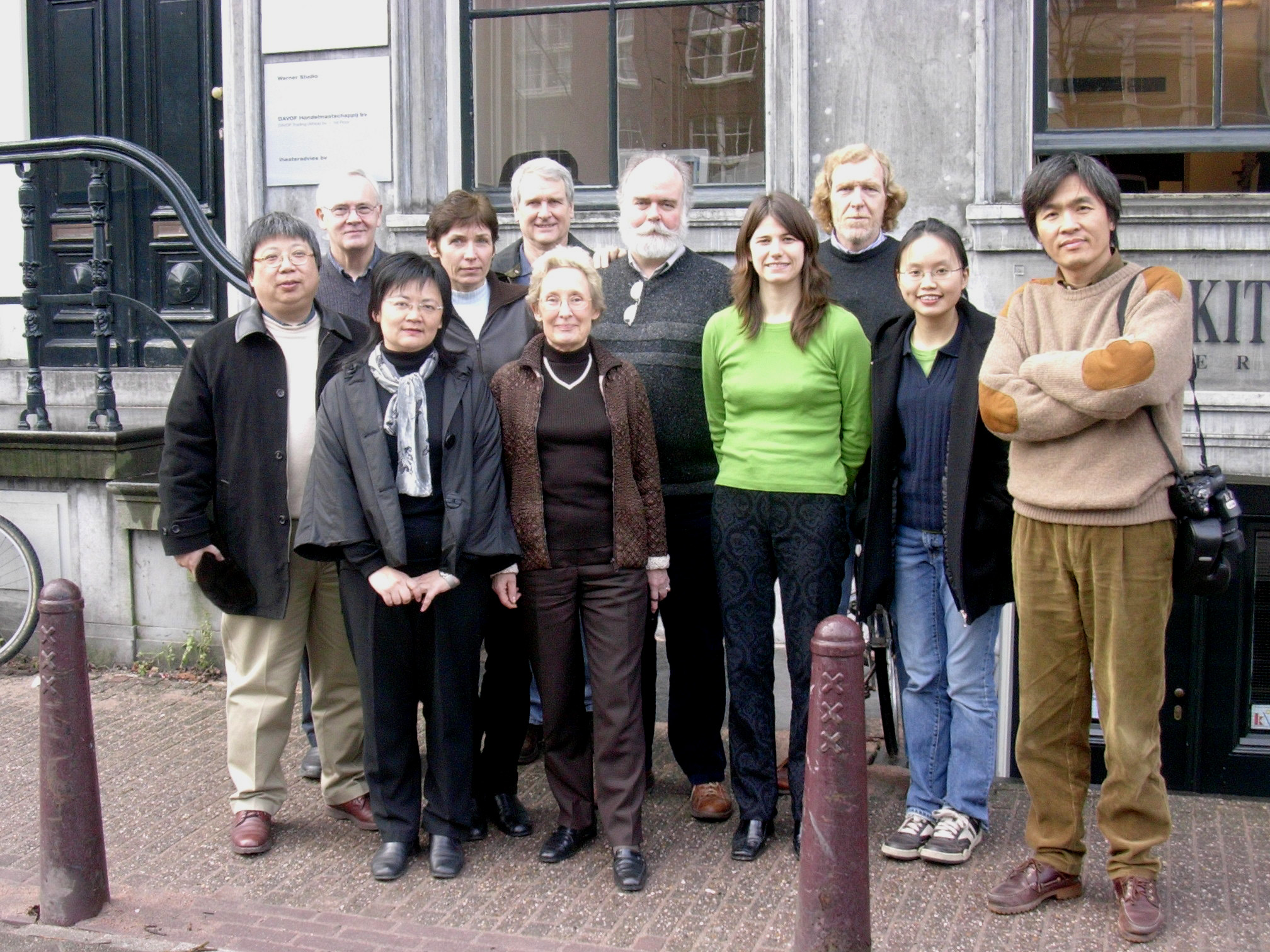
2005 Handover of the Amsterdam Secretariat
Seeking a Long-term Solution
Drawing on constant experiences of diplomatic struggles, Duncan Chang and his fellow theatre practitioners had learned to take precautions and seek support from international colleagues, but he also realized that “the threat was always there, and we could not only rely on case-by-case reactive measures – we needed to find an ultimate way to protect ourselves, to protect our name.” Throughout the years of networking, Chang had occasionally heard about the budget shortfalls troubling the OISTAT Secretariat in Amsterdam, which sparked a new idea. Making several inquiries regarding the amount of money needed to operate the OISTAT Secretariat, he thought to himself: “Back then, our government was providing frequent financial aid to diplomatic allies, yet we could rarely track how the money was actually spent. By comparison, international networking through OISTAT has borne tangible fruits, so why don’t we give it a try?”
Riding the wave of winning the Special Silver Medal at the 2003 PQ, Chang presented his initiative to Yu-Chiou Tchen, then Chairperson of the Council for Cultural Affairs, and Fan Sun-Lu, then Deputy Minister of Education, while stage and lighting designer Lin Keh-Hua also actively championed the cause on the ground. The proposal immediately won solid support from both the government and the theatre community. In 2004, OISTAT held its Executive Committee, Governing Board, and Architecture Commission meetings in Taiwan once again. Hosted in Yilan, the gathering was organized on a larger scale than the previous event. Chang seized the opportunity to pitch the idea of relocating the OISTAT Secretariat to Taipei to then-OISTAT President Maija Pekkanen. Though taken aback at first, Pekkanen soon recognized the potential and began to seriously consider its feasibility.
Following the preliminary proposal, Chang traveled to Amsterdam with Austin Wang and Wei-Wen Chang to negotiate the details of the relocation. As an organization rooted in Europe since its founding, OISTAT naturally harbored doubts about moving its operations to an East-Asian island thousands of miles away. Both parties painstakingly hammered out a new organizational framework, managing to reach a consensus after rounds of intense debates. “But thanks to the discussions that allowed us to have a more comprehensive knowledge of how OISTAT functioned, now we really got involved, rather than passive participants like we used to be before,” Chang recalled. In 2007, the OISTAT Secretariat officially settled into its new home in Taipei (later designated as OISTAT Headquarters), marking the first international NGO with its headquarters in Taiwan.
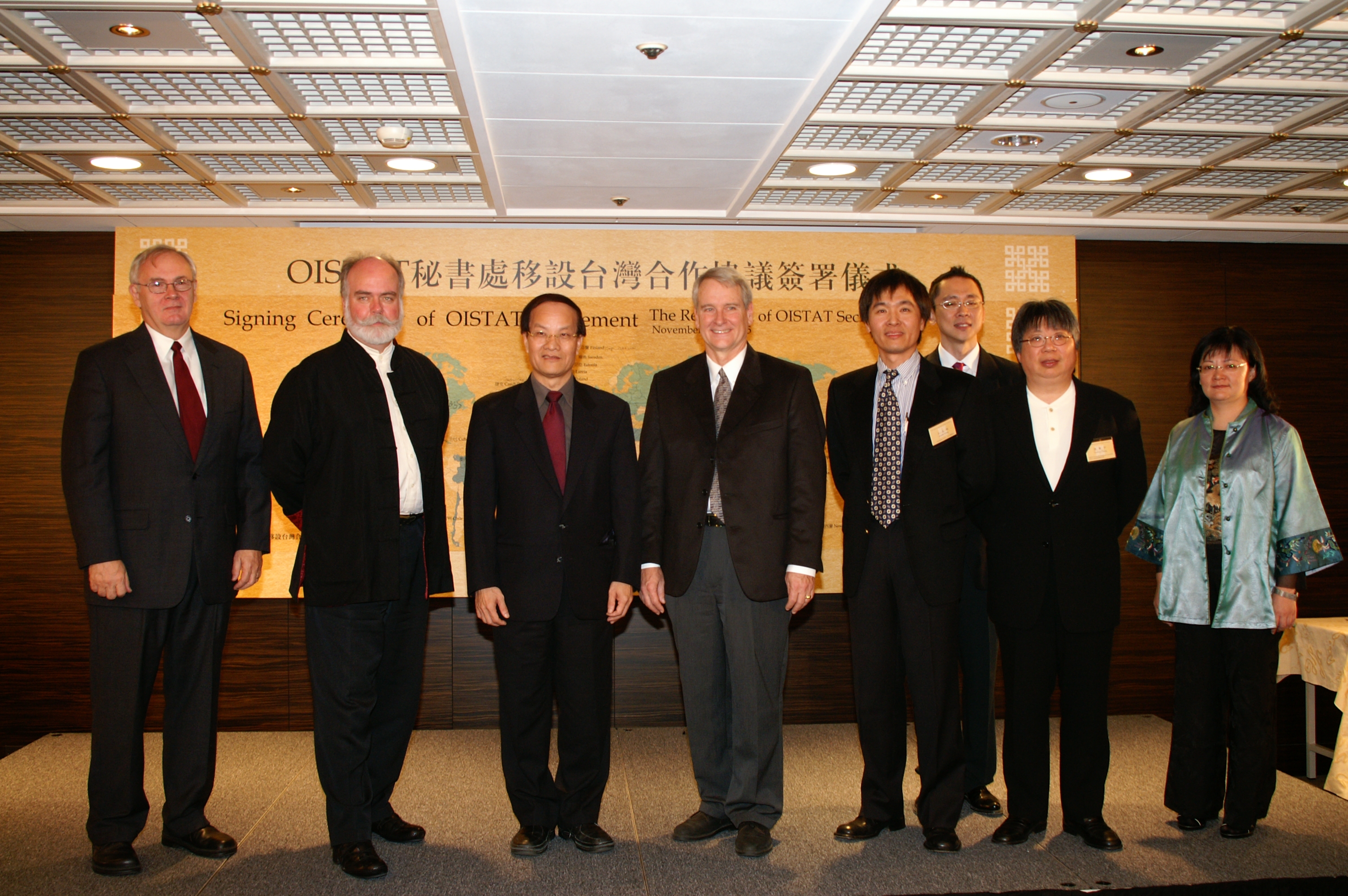
2005 Signing ceremony for relocation of the secretariat to Taiwan
Reflecting on the journey, Chang remarked with a touch of humor: “I am just a businessman in theatre; I’m not a theatre designer or professor like the others.” However, it was precisely his unique instinct that safeguarded Taiwan’s presence on the international stage amid persistent diplomatic pressure. Sometimes, absolute power is not the only way to make a voice heard – staying flexible, engaging deeply, and building genuine friendships will always help us find a way.
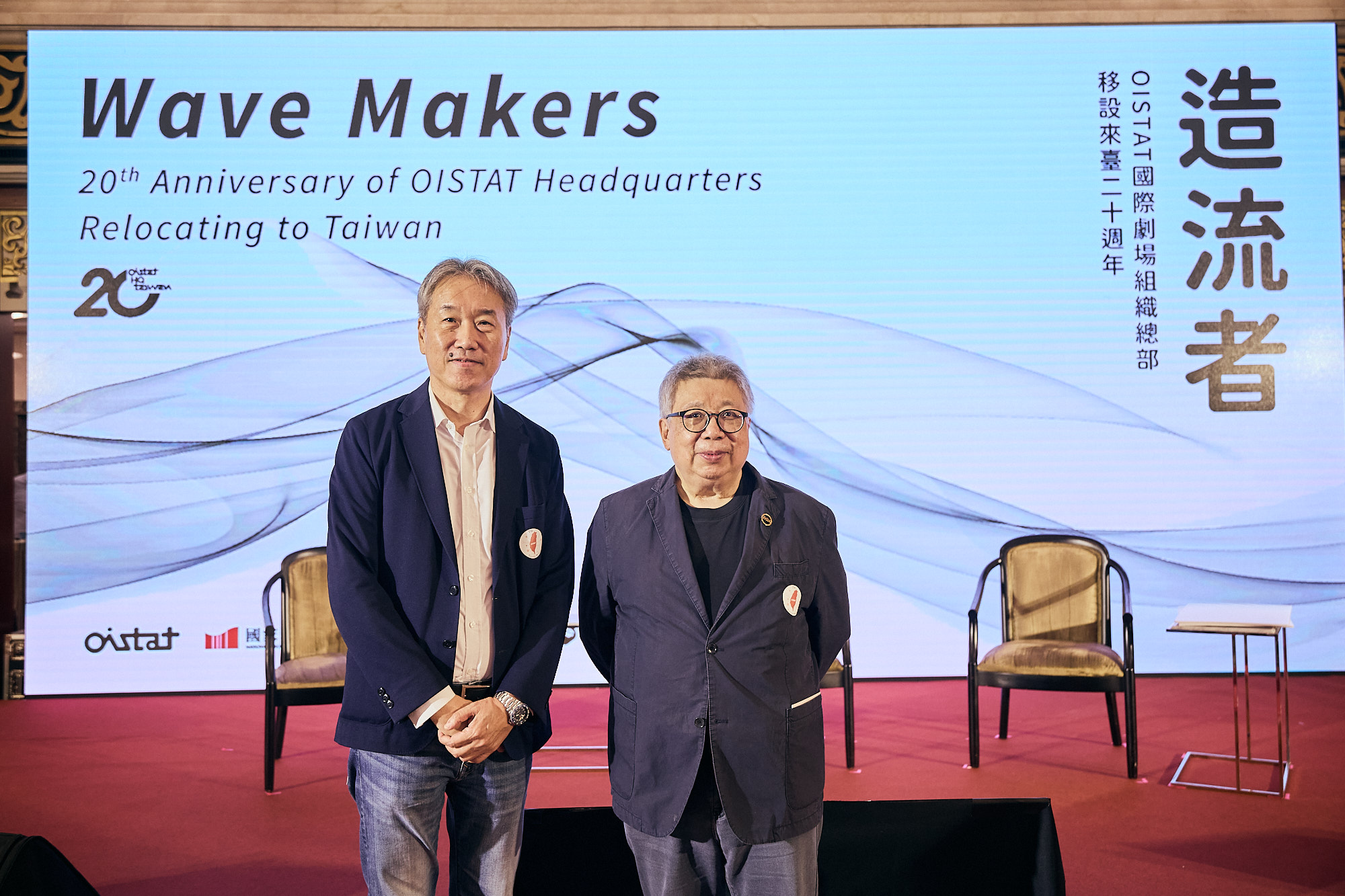
2026 20th Anniversary of OISTAT Headquarters in Taiwan ©Chen You-Wei
1 Also founded in the Czech Republic, OISTAT is an independent entity from the Prague Quadrennial (PQ), though the two share a close working relationship. Since OISTAT members – primarily theatre designers and technicians from around the world – are the main participants at the PQ, OISTAT traditionally convenes its meetings during the festival.


